🎉 Up to 70% Off Selected ItemsShop Sale
Loch Ness Thornless Blackberry
Rubus fruticosus 'Loch Ness'
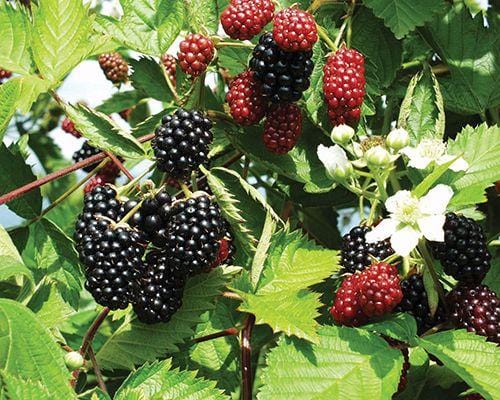
Try this new, richly sweet/tart, thornless Scottish blackberry for its monstrously large, shiny black fruit and better cold weather tolerance. Semi-erect canes are highly productive and can be grown like raspberries, with little support. Space canes 6' apart.
Expect a big crop of fruit that ripens later, in August and September, to extend the season when grown together with the earlier-fruiting, trailing, R. ursinus varieties. Yield averages 8 pounds per plant. USDA Zones 5-9.
Try this new, richly sweet/tart, thornless Scottish blackberry for its monstrously large, shiny black fruit and better cold weather tolerance. Semi-erect canes are highly productive and can be grown like raspberries, with little support. Space canes 6' apart.
Expect a big crop of fruit that ripens later, in August and September, to extend the season when grown together with the earlier-fruiting, trailing, R. ursinus varieties. Yield averages 8 pounds per plant. USDA Zones 5-9.
$5.10
Original: $16.99
-70%Loch Ness Thornless Blackberry—
$16.99
$5.10Product Information
Product Information
Shipping & Returns
Shipping & Returns
Description
Rubus fruticosus 'Loch Ness'
Try this new, richly sweet/tart, thornless Scottish blackberry for its monstrously large, shiny black fruit and better cold weather tolerance. Semi-erect canes are highly productive and can be grown like raspberries, with little support. Space canes 6' apart.
Expect a big crop of fruit that ripens later, in August and September, to extend the season when grown together with the earlier-fruiting, trailing, R. ursinus varieties. Yield averages 8 pounds per plant. USDA Zones 5-9.
Try this new, richly sweet/tart, thornless Scottish blackberry for its monstrously large, shiny black fruit and better cold weather tolerance. Semi-erect canes are highly productive and can be grown like raspberries, with little support. Space canes 6' apart.
Expect a big crop of fruit that ripens later, in August and September, to extend the season when grown together with the earlier-fruiting, trailing, R. ursinus varieties. Yield averages 8 pounds per plant. USDA Zones 5-9.